


A few years ago, your smartwatch could easily make it from morning until bedtime on a single charge. You tracked workouts, checked notifications, monitored your sleep, and still had battery left at the end of the day. Now things feel different. You charge it every night, sometimes twice a day, and you’re thinking if you did something wrong, or if you just got unlucky with a faulty device. It is not true. What you’re noticing is one of the most predictable things about owning a smartwatch.
One of the most common concerns smartwatch owners face is declining battery performance. That timeline shifts depending on how often you charge it and which features you use most, but the pattern itself is completely normal. It’s simply how lithium-ion batteries, the type used in nearly every smartwatch on the market, naturally age over time.
In this guide, you’ll learn how long a smartwatch battery typically lasts, what causes battery performance to decline, how to spot the signs of a failing battery, and whether a repair or replacement makes the most sense for your situation.
What Is the Typical Lifespan of a Smartwatch Battery?
The typical smartwatch battery life is two to five years. Batteries gradually lose their ability to hold a charge. This process is known as battery degradation, which simply means the battery stores less power than it did when new. For example, a smartwatch that originally lasted two days between charges might only last one day after several years of use. Several factors influence how long a battery remains healthy:
- Charging frequency
- Daily usage patterns
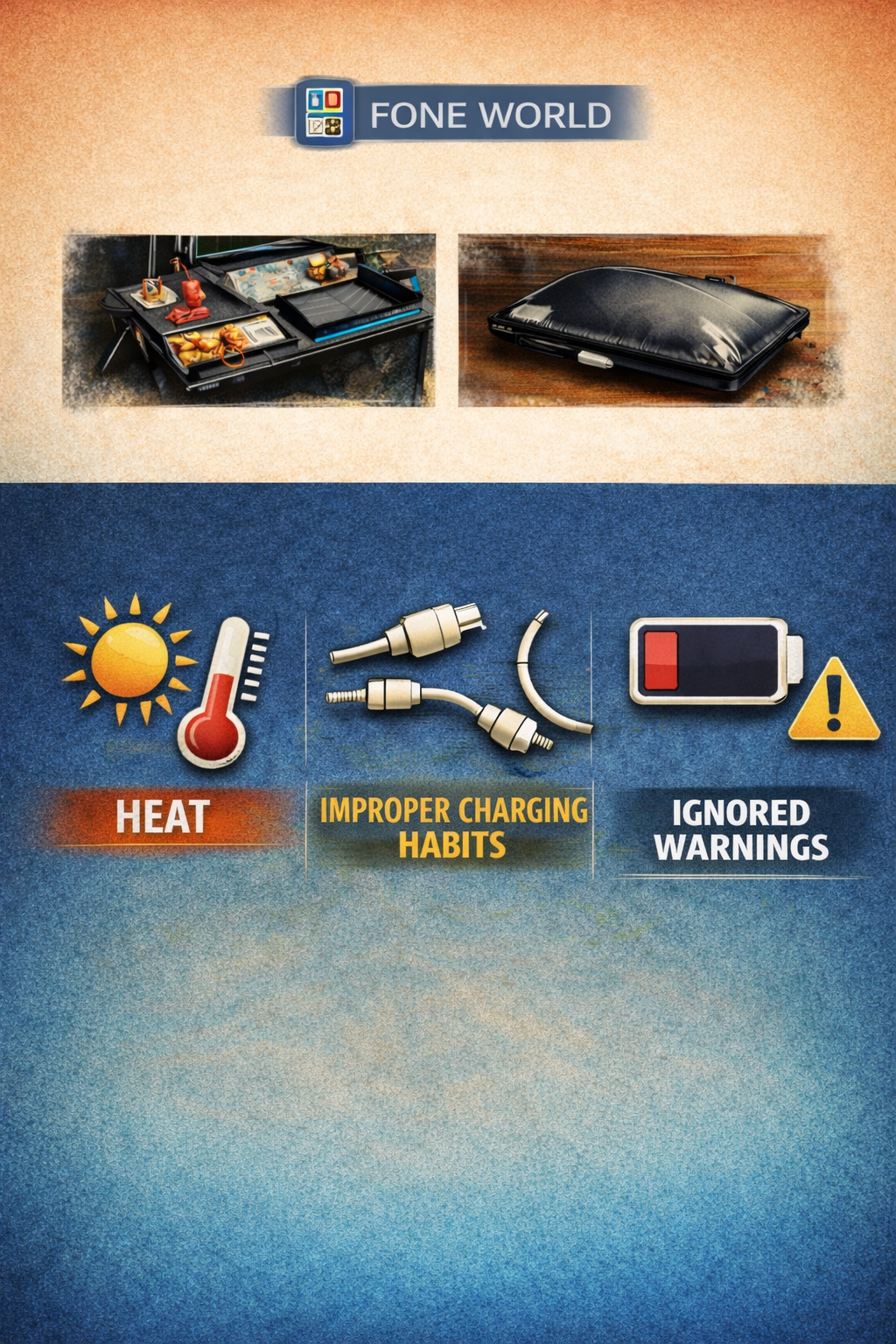
- Exposure to heat
- Software activity
- Battery quality
Different brands also perform differently. Devices such as Apple Watch, Samsung Galaxy Watch, Garmin, and Fitbit models can all have varying battery expectations based on hardware and software design.
It’s important to separate battery lifespan from device lifespan. A smartwatch can remain perfectly usable long after its original battery begins showing signs of wear. In many cases, replacing the battery can extend the useful life of the device without needing to buy a new watch. For most owners, gradual battery decline is expected. Rapid battery loss, however, often indicates a problem worth investigating.
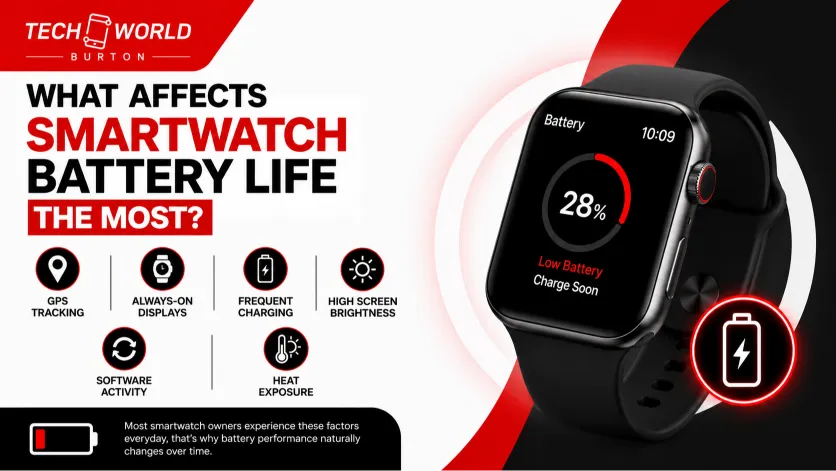
What Affects Smartwatch Battery Life the Most?
Several everyday habits have a direct impact on battery performance and overall battery lifespan. Some factors are within your control.
GPS Tracking
GPS is the most power-hungry feature found on modern smartwatches. If you regularly track runs, cycling sessions, hikes, or outdoor workouts, your battery will typically age faster than that of someone who only uses their watch for notifications.
Always-On Displays
Many smartwatches keep the screen visible throughout the day. While convenient, an always-on display increases power consumption and can reduce overall battery longevity over time.
Frequent Charging
Modern batteries are designed for regular charging, but daily charging still contributes to long-term battery wear. The more often a battery cycles from empty to full, the sooner capacity begins to decline.
High Screen Brightness
Bright screens consume more energy. If your display remains at maximum brightness throughout the day, you’ll likely experience faster battery drain and more frequent charging.
Software Activity
Apps running in the background can have a significant effect on battery life. Notifications, health tracking, location services, and syncing features all require power. Sometimes poor battery performance isn’t caused by the battery itself. Software settings or background activity may be responsible.
Heat Exposure
Heat is one of the biggest enemies of battery health. Leaving a smartwatch in direct sunlight, a hot car, or other warm environments can accelerate battery aging and shorten overall lifespan.
Most smartwatch owners experience these factors everyday, that’s why battery performance naturally changes over time.
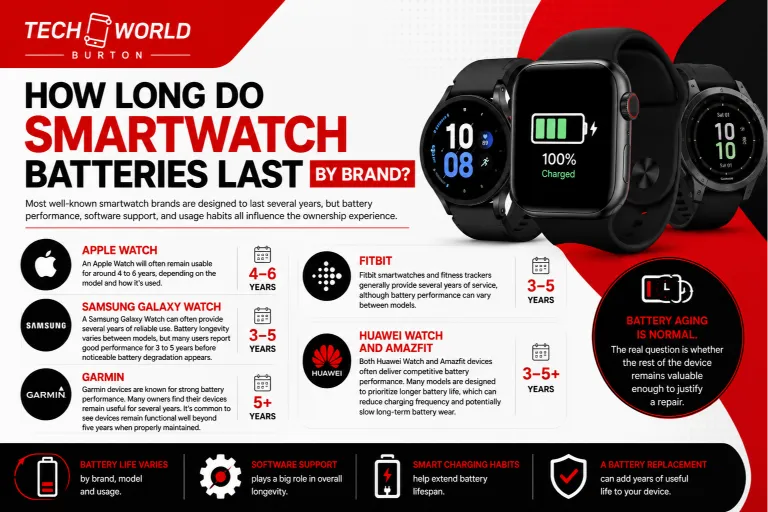
How Long Do Smartwatch Batteries Last by Brand?
Most well-known smartwatch brands are designed to last several years, but battery performance, software support, and usage habits all influence the ownership experience. A smartwatch may continue working physically long after its battery begins to show signs of wear. That’s why it’s useful to look at overall device lifespan rather than battery life alone.
Apple Watch
An Apple Watch will often remain usable for around 4 to 6 years, depending on the model and how it’s used.
Many owners notice reduced battery performance after a few years of daily charging. However, if the watch still runs smoothly and receives software updates, a battery replacement may extend its useful life.
Samsung Galaxy Watch
A Samsung Galaxy Watch can often provide several years of reliable use. Battery longevity varies between models, but many users report good performance for 3 to 5 years before noticeable battery degradation appears. If you’ve been wondering how long do Samsung smart watches last, the answer usually depends more on battery health and software support than physical durability.
Garmin
Garmin devices are known for strong battery performance, especially fitness-focused models. Many owners find their devices remain useful for several years because Garmin watches often prioritize battery efficiency. Even so, batteries still age over time and eventually lose capacity. For users asking how long Garmin smartwatches last, it’s common to see devices remain functional well beyond five years when properly maintained.
Fitbit
Fitbit smartwatches and fitness trackers generally provide several years of service, although battery performance can vary between models. As with other brands, charging habits, daily usage, and software demands all play a role in long-term battery health.
Huawei Watch and Amazfit
Both Huawei Watch and Amazfit devices often deliver competitive battery performance. Many models are designed to prioritize longer battery life, which can reduce charging frequency and potentially slow long-term battery wear.
Regardless of brand, battery aging is normal. The real question isn’t whether the battery will eventually wear out. It almost certainly will. The more important question is whether the rest of the device remains valuable enough to justify a repair when that happens.
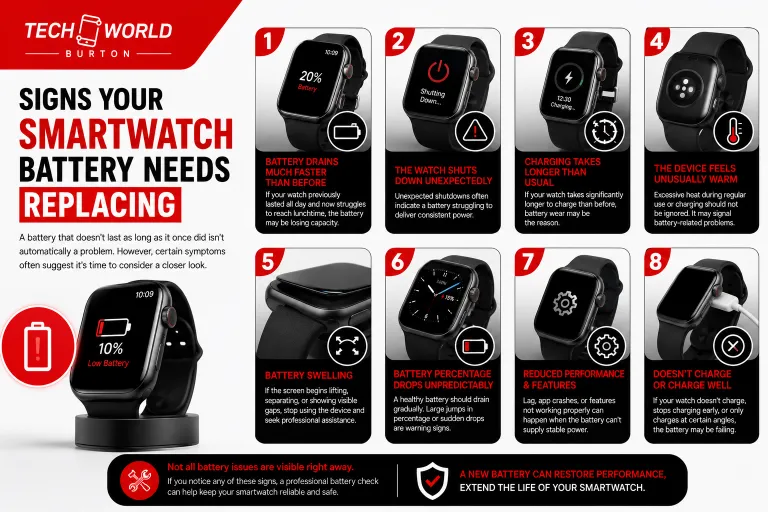
Signs Your Smartwatch Battery Needs Replacing
A battery that doesn’t last as long as it once did isn’t automatically a problem. However, certain symptoms often suggest it’s time to consider a closer look.
Battery Drains Much Faster Than Before
This is usually the first sign users notice. If your watch previously lasted all day and now struggles to reach lunchtime, the battery may be losing capacity. Gradual decline is normal. Sudden changes deserve attention.
The Watch Shuts Down Unexpectedly
Unexpected shutdowns often indicate a battery struggling to deliver consistent power. You may notice the watch switching off while showing 20% or 30% battery remaining. This is not typical battery aging.
Charging Takes Longer Than Usual
Some owners find that their watch takes significantly longer to charge than before. While charging issues can sometimes involve software or accessories, battery wear may also be contributing.
The Device Feels Unusually Warm
Occasional warmth during charging is normal. Excessive heat during regular use or charging should not be ignored. Persistent overheating may signal battery-related problems.
Battery Swelling
Although less common, battery swelling requires immediate attention. If the screen begins lifting, separating, or showing visible gaps, stop using the device and seek professional assistance.
Frequent Charging Becomes Necessary
If you’re charging your watch multiple times per day despite normal usage, battery health may be declining beyond what most users would consider acceptable.
Quick Battery Health Check
The table below can help determine whether your experience falls within normal expectations.
| Symptom | Normal Aging | Needs Attention |
|---|---|---|
| Slightly shorter battery life | ✓ | |
| Battery lasts fewer hours each year | ✓ | |
| Needs charging multiple times daily | ✓ | |
| Sudden shutdowns | ✓ | |
| Significant overheating | ✓ | |
| Battery swelling | ✓ |
Not sure whether your battery is failing? A professional diagnostic check can identify the cause before you spend money on a repair or replacement.
Is Your Battery Normal or Failing?
Most smartwatch owners struggle with the same question: “Is my battery actually failing, or is this just normal aging?” The answer usually depends on how dramatic the change has been. A battery that slowly loses performance over several years is behaving normally. A battery that suddenly loses power, drains overnight, or causes unexpected shutdowns often needs further investigation.
Consider the following examples:
| Situation | Likely Normal | Potential Battery Problem |
|---|---|---|
| Watch lasts slightly less than when new | ✓ | |
| Battery drains faster during GPS workouts | ✓ | |
| Battery percentage drops suddenly | ✓ | |
| Watch powers off with charge remaining | ✓ | |
| Battery drains overnight while idle | ✓ | |
| Watch becomes noticeably hot | ✓ |
Many users assume they need a new smartwatch when battery performance declines. In reality, the rest of the device may still be in excellent condition. Understanding this difference can save money and help you make a more informed decision.
Can a Smartwatch Battery Be Replaced?
Yes, in many cases, a smartwatch battery replacement is possible. However, replacing a smartwatch battery is usually more complex than replacing the battery in a traditional watch. Modern smartwatches are designed with sealed housings to improve durability and help maintain water resistance. Accessing internal components often requires specialist tools and careful handling. This is why professional repair is always recommended. Battery replacement process may include:
- Diagnostic testing
- Opening the device safely
- Removing the worn battery
- Installing a replacement battery
- Reassembling and testing the watch
Many battery-related symptoms look similar to software problems or charging issues. For that reason, a proper diagnosis is often the first step. If you’re experiencing battery drain, charging problems, or unexpected shutdowns, professional device diagnostics can help identify the real cause before any repair work begins.
Smartwatch Battery Replacement Cost
Replacing a smartwatch battery typically costs somewhere in the range of £30 to £80, depending on the brand, model, and whether you go through the manufacturer or an independent repair shop. It’s always worth getting a clear quote before committing to anything. A trustworthy repair service will confirm the price upfront rather than surprising you once the work is already underway. If you’re in the Burton area, getting your smartwatch battery replacement quoted properly takes just a few minutes and saves you from guessing.
Repair or Replace? A Simple Way to Decide
There is no universal answer. Many people automatically assume that declining battery performance means the entire device needs replacing. That’s not always true. The right choice depends on the condition of the device, repair costs, and your expectations.
The comparison below can help guide the decision.
| Replace Battery | Buy a New Smartwatch |
|---|---|
| Battery is the primary issue | Multiple faults are present |
| Device still performs well | Device feels slow or outdated |
| Lower overall cost | Access to newer features |
| Extends current device lifespan | Fresh manufacturer warranty |
| More environmentally friendly | Complete hardware refresh |
If your car needs a new battery, you wouldn’t automatically replace the entire vehicle. The same logic often applies to smartwatches. If your smartwatch still works well apart from battery life, a battery replacement may be the most cost-effective solution. Many users find that battery replacement provides several more years of useful service from a watch they already know and enjoy.
What Happens to My Data If the Battery Dies?
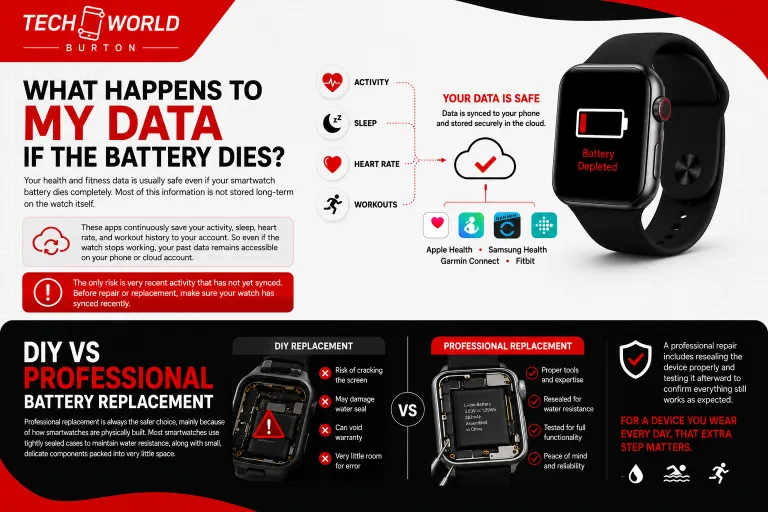
Your health and fitness data is usually safe even if your smartwatch battery dies completely. Most of this information is not stored long-term on the watch itself. Instead, it is synced to your phone through apps like Apple Health, Samsung Health, Garmin Connect, or Fitbit.
These apps continuously save your activity, sleep, heart rate, and workout history to your account. So even if the watch stops working, your past data remains accessible on your phone or cloud account.
The only risk is very recent activity that has not yet synced. Before repair or replacement, make sure your watch has synced recently.
DIY vs Professional Battery Replacement
Professional replacement is always the safer choice, mainly because of how smartwatches are physically built. Most smartwatches use tightly sealed cases to maintain water resistance, along with small, delicate components packed into very little space. Can a smartwatch battery be replaced at home with the right kit? Sometimes, yes. But doing it yourself risks cracking the screen, damaging the water seal, or voiding any remaining warranty, and there’s often very little room for error inside the case.
A professional repair, by contrast, usually includes resealing the device properly and testing it afterward to confirm everything still works as expected. For a device you’re wearing daily, possibly while showering or working out, that extra step matters more than it might for other electronics.
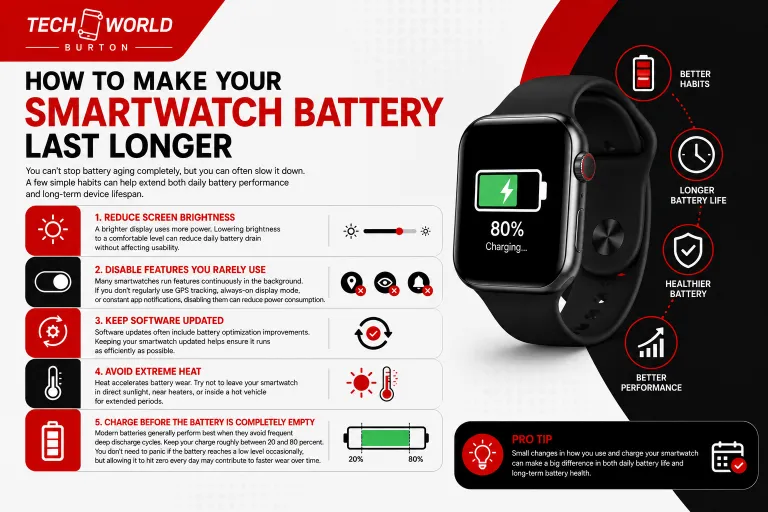
How to Make Your Smartwatch Battery Last Longer
You can’t stop battery aging completely, but you can often slow it down. A few simple habits can help extend both daily battery performance and long-term device lifespan.
Reduce Screen Brightness
A brighter display uses more power. Lowering brightness to a comfortable level can reduce daily battery drain without affecting usability.
Disable Features You Rarely Use
Many smartwatches run features continuously in the background. If you don’t regularly use GPS tracking, always-on display mode, or constant app notifications, disabling them can reduce power consumption.
Keep Software Updated
Software updates often include battery optimization improvements.
Keeping your smartwatch updated helps ensure it runs as efficiently as possible.
Avoid Extreme Heat
Heat accelerates battery wear. Try not to leave your smartwatch in direct sunlight, near heaters, or inside a hot vehicle for extended periods.
Charge Before the Battery Is Completely Empty
Modern batteries generally perform best when they avoid frequent deep discharge cycles. Keep your charge roughly between 20 and 80 percent. You don’t need to panic if the battery reaches a low level occasionally, but allowing it to hit zero every day may contribute to faster wear over time.
Review Battery-Hungry Apps
Sometimes the battery isn’t the problem. Apps running in the background can increase power consumption and create the appearance of battery failure. If battery life suddenly changes, reviewing recent app activity may help identify the cause.
Monitor Changes Over Time
Gradual decline is normal. What matters is whether the decline becomes severe enough to affect daily use. By paying attention to battery performance, you can often spot problems early and make informed decisions about repair or replacement.
Professional Smartwatch Battery Replacement: What to Expect
A professional Smartwatch Battery Replacement usually starts with checking whether the battery is actually the problem. Many smartwatch issues that look like battery failure are caused by charging faults or software glitches instead.
This first check helps avoid unnecessary repairs and ensures you only replace the battery if it’s truly needed. If a battery issue is confirmed, the repair process is straightforward. The technician safely opens the watch, removes the old battery, installs a new one, and tests charging and basic performance before closing the device again.
Because smartwatches are tightly sealed, this work requires care and the right tools. It is not the same as changing a regular battery. One common concern is water resistance. Opening the device can affect sealing, so the repair must be done properly and tested after assembly. Most reputable repairs also include a repair warranty, which gives extra confidence that the work has been completed correctly.
In simple terms, professional repair is about two things: confirming the real issue first, and then restoring normal battery performance safely if a replacement is needed. Book a smartwatch diagnostic with Tech World UK to find out whether battery replacement can restore your device’s performance.
Conclusion
A smartwatch battery that’s slowing down after a couple of years isn’t a flaw; it’s just chemistry doing what chemistry does. The real question isn’t whether your battery will eventually decline; it’s what you do once it has. Sometimes that means a few small habit changes. Sometimes it means a straightforward battery swap that makes the watch feel new again.
If your smartwatch is showing any of the signs covered above, a same-day diagnostic at Tech World in Burton-on-Trent can tell you exactly what it needs, with no guessing i